

Sprouts are one of the simplest and most affordable superfoods you can grow in your own kitchen. Packed with vitamins, minerals, antioxidants, and enzymes, sprouts are living foods that can elevate your nutrition in a powerful way. Whether it’s broccoli sprouts, lentil sprouts, pea sprouts, or dozens of other varieties, sprouting at home is an easy process that requires little more than organic seeds, a glass jar, and some fresh water.
In this blog, we’ll explore:
- What sprouts are and why they’re so healthy
- The top types of sprouts you can grow at home
- The health benefits of sprouting at home
- A step-by-step sprouting guide for beginners
- Tips on choosing organic seeds and safe sprouting practices
What Are Sprouts?
Sprouts are young, tender shoots that germinate from seeds, beans, grains, or legumes. In the early stages of growth, plants concentrate their nutrients and bioactive compounds to support the first steps of life. This makes sprouts incredibly nutrient-dense compared to their mature plant forms.
Common sprouts include broccoli, alfalfa, mung bean, lentil, radish, and pea sprouts.
Sprouts are:
- Low in calories but high in nutrients
- Rich in plant enzymes that aid digestion
- A living food, consumed fresh for maximum benefit
This is why many people are turning to sprouting at home as a natural way to boost their diets.
Health Benefits of Sprouting at Home
When you sprout seeds, you unlock a cascade of nutritional benefits:
1. High in Antioxidants
Broccoli sprouts, in particular, are famous for their sulforaphane content—a compound shown to support detoxification, reduce inflammation, and promote cellular health.
2. Improved Digestibility
Sprouting breaks down complex starches in legumes and grains, making them easier to digest. Anti-nutrients like phytic acid are reduced, improving nutrient absorption.
3. Rich in Vitamins and Minerals
Sprouts often contain higher levels of vitamins C, K, and some B vitamins compared to unsprouted seeds.
4. Protein Boost
Legume sprouts, such as lentil and pea sprouts, are protein-rich, making them a great addition to plant-based diets.
5. Gut Health Support
Sprouts provide dietary fiber and plant enzymes that can support healthy digestion and balanced gut microbiota.
These are just a few reasons why sprouting at home is considered a must-have habit in holistic nutrition circles.
Top Seeds for Sprouting at Home
There are dozens of seeds you can use for sprouting at home. Below are some of the most popular and beneficial.
🌱 Broccoli Sprouts
- Rich in sulforaphane, a powerful antioxidant.
- Known for cancer-protective and detoxifying properties.
- Mild, slightly peppery taste.
🌱 Lentil Sprouts
- High in plant protein and fiber.
- Contain iron, magnesium, and folate.
- Crunchy texture and slightly nutty flavor.
🌱 Pea Sprouts
- Excellent source of protein and vitamins A, C, and K.
- Sweet, fresh taste that works well in salads and stir-fries.
🌱 Alfalfa Sprouts
- Low in calories but rich in vitamin K and phytoestrogens.
- Great for hormone balance and bone health.
🌱 Radish Sprouts
- Spicy and tangy flavor.
- Contain glucosinolates with antioxidant properties.
🌱 Mung Bean Sprouts
- Popular in Asian cuisine.
- High in vitamin C, folate, and iron.
🌱 Sunflower Sprouts
- Rich in vitamin E and zinc.
- Deliciously nutty flavor.
When it comes to sprouting at home, variety is key. Mixing seeds means mixing benefits.
Step-by-Step Guide: Sprouting at Home
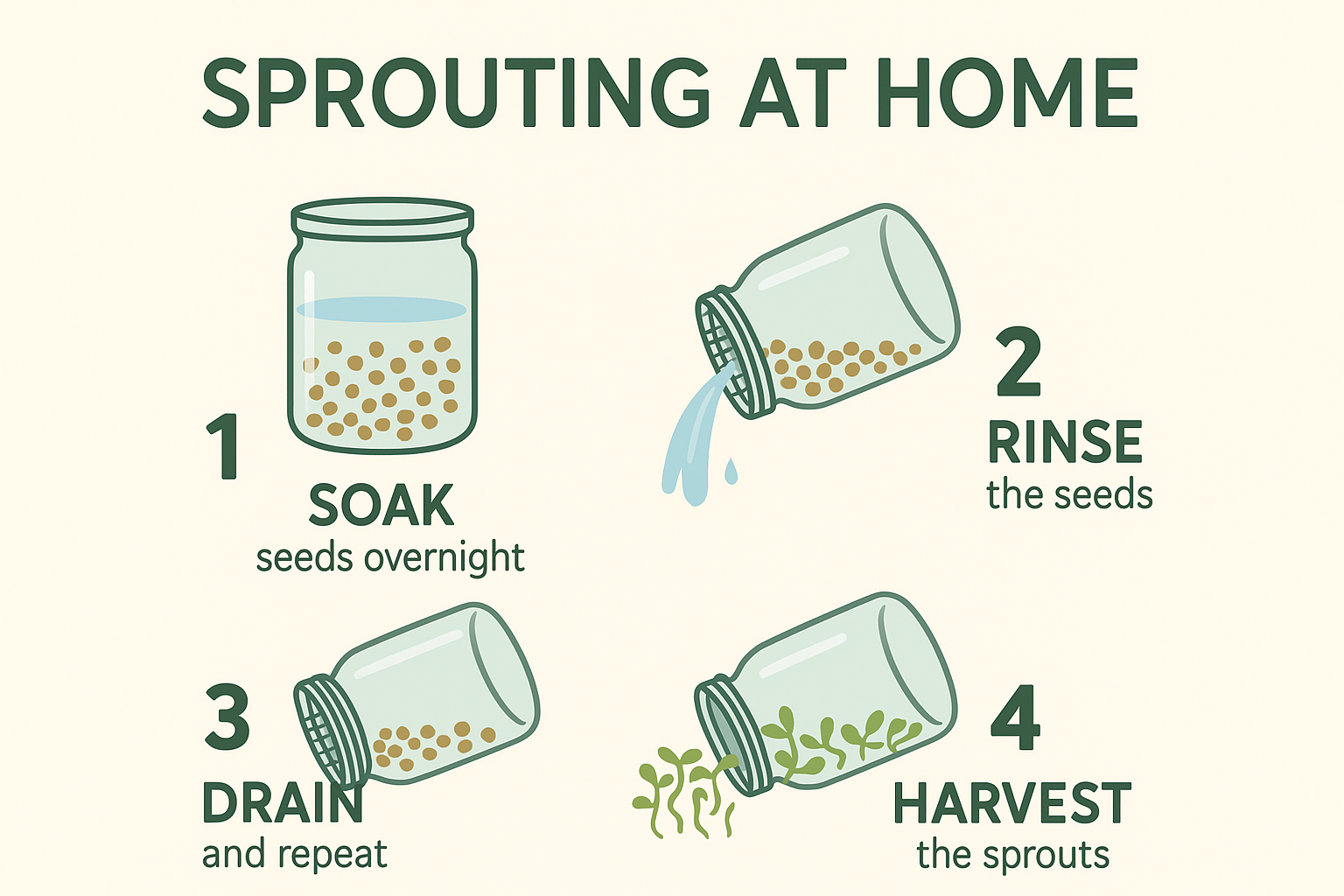
The beauty of sprouting is its simplicity. You don’t need a garden, soil, or even sunlight—just seeds, water, and patience. Here’s a simple guide for sprouting at home.
What You’ll Need:
- Organic sprouting seeds (avoid treated or non-organic seeds, as these may contain chemicals)
- A glass jar (wide-mouthed jars work best)
- A sprouting lid or mesh screen (to allow rinsing and airflow)
- Fresh, filtered water
Instructions:
- Measure and Soak
- Add 2–3 tablespoons of seeds into your jar.
- Cover them with water (about 3x their volume).
- Let them soak overnight (6–12 hours depending on the seed).
- Drain and Rinse
- After soaking, drain the water through the mesh lid.
- Rinse the seeds with fresh water, then drain again.
- Set Jar at an Angle
- Place the jar upside down at an angle to allow excess water to drain.
- Keep in a cool, dark place.
- Rinse Twice Daily
- Rinse seeds morning and evening with fresh water.
- Drain well to prevent mold.
- Wait and Watch
- Within 2–5 days (depending on seed type), your sprouts will be ready.
- Broccoli sprouts usually take 4–5 days, while mung beans are ready in 2–3.
- Harvest and Store
- Once sprouts reach 1–2 inches in length, harvest them.
- Store in a sealed container in the fridge for up to 5 days.
That’s it—sprouting at home is as easy as rinse, drain, and repeat.
Tips for Successful Sprouting
- Always use organic seeds. Non-organic seeds may contain pesticides or fungicides not meant for sprouting.
- Avoid stagnant water. Proper draining is crucial to avoid bacteria or mold.
- Don’t oversoak. Over-soaking seeds can cause them to rot.
- Rotate your jars. If you want a constant supply, start new batches every 2–3 days.
- Experiment with mixes. Blend broccoli sprouts with radish or pea sprouts for flavor and nutrient diversity.
Safety tip: Sprouts are a raw food and can occasionally harbor bacteria. Wash hands, rinse seeds thoroughly, and refrigerate sprouts once ready.
Ways to Eat Sprouts
Sprouts are versatile and can be added to many dishes:
- Toss broccoli sprouts into salads for a detox boost.
- Add lentil sprouts to grain bowls for protein.
- Top soups or stir-fries with pea or mung bean sprouts.
- Blend sprouts into smoothies for added enzymes.
- Use sprouts in sandwiches, wraps, or sushi rolls.
Adding them raw is best to preserve their live enzymes and delicate nutrients.
Why Choose Sprouting at Home Over Store-Bought?
While you can buy sprouts in supermarkets, sprouting at home has several advantages:
- Freshness: Store-bought sprouts may sit on shelves for days, reducing vitality.
- Control: You know exactly what seeds and water you’re using.
- Cost-effective: A small bag of seeds can produce weeks of fresh sprouts.
- Sustainability: Less packaging and fewer trips to the store.
Final Thoughts: Sprouting at Home for Health
Sprouting at home is one of the simplest, cheapest, and most effective ways to add fresh, living foods to your diet. Broccoli sprouts, lentil sprouts, pea sprouts, and other varieties provide antioxidants, protein, vitamins, and digestive benefits that can support overall wellness.
With just organic seeds, a glass jar, and a few minutes of care each day, anyone can grow their own nutrient-dense superfoods at home. For those who want to take control of their health, sprouting at home is a habit worth starting today.